
Turning Turtle
Dancing with the Darkness [#5]

I have often feared moving forward when the outcome is uncertain. I could more accurately say that yes, this is true, about everything I do, and I have walked through territory where the outcome is absolutely uncertain. I live there. I have been compelled to live there.
I have avoided driving through whiteouts on the mountain, when I could. A whiteout merges blizzard and wind, with snow going sideways. Visibility for driving disappears. It feels like vertigo. It can come on suddenly. All drivers are not aware they are in danger and head obliviously toward their destination, careening around corners toward stopped cars ahead from an earlier crash.
I have avoided the tule fog that sinks along the roads early in the morning, obscuring cars even 30 feet ahead. Even the lane lines on the highway are only occasionally visible, creating a bizarre sense of vertigo. Slowing down can help, it feels unsafe to stop, to move forward, where is the shoulder anyway? Is it safe to hold still when everything is still moving, and no one can see?
I don’t know how I know these obscure names for things, except that I learned them from experience and the legacy of men adventuring, conquering, taming the elements. I was a bystander. I saw it all clearly. I was terrified. I understood the situation. I requested strategy about how to handle these things. I was handed their strategy about how to handle these things.
But my strategy would have been to sit it out.
If there’s so-called tule fog then wait until it burns off, even if that takes a few days or a few weeks. And where we lived in Oregon it wasn’t really tule fog, that’s a term for the California valleys. They must have called it that in Iowa, where my father was from, as well. It’s also called radiation fog, something about the land, not a reference to radiation machines or worse, the terror that the word evokes.
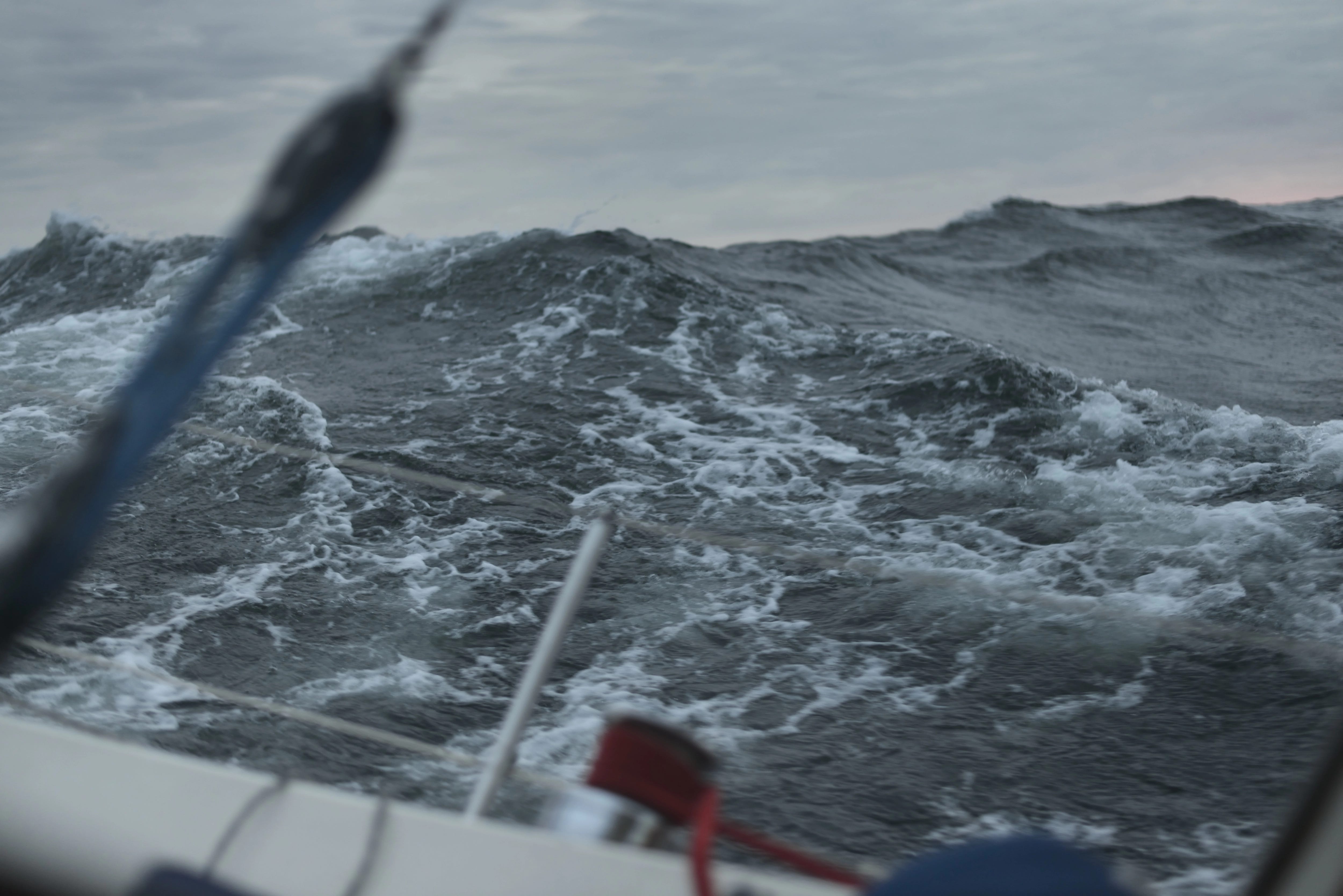
There are water hazards too, such as turning turtle in a sailboat, meaning the boat turns upside down all the way, capsizing completely in a strong wind on a stormy day. In my experience, the mast gets stuck on the bottom of the bay. I learned the word young. Being caught in the small area under the bow, ropes tangled everywhere, water rushing in, has emotional consequences.
I avoid, the best I can, being in small sailboats with beginning sailors, who think they can do anything, male bravado, outdoor adventures.
My strategy would be now to sit it out. I imagine I have the choice.
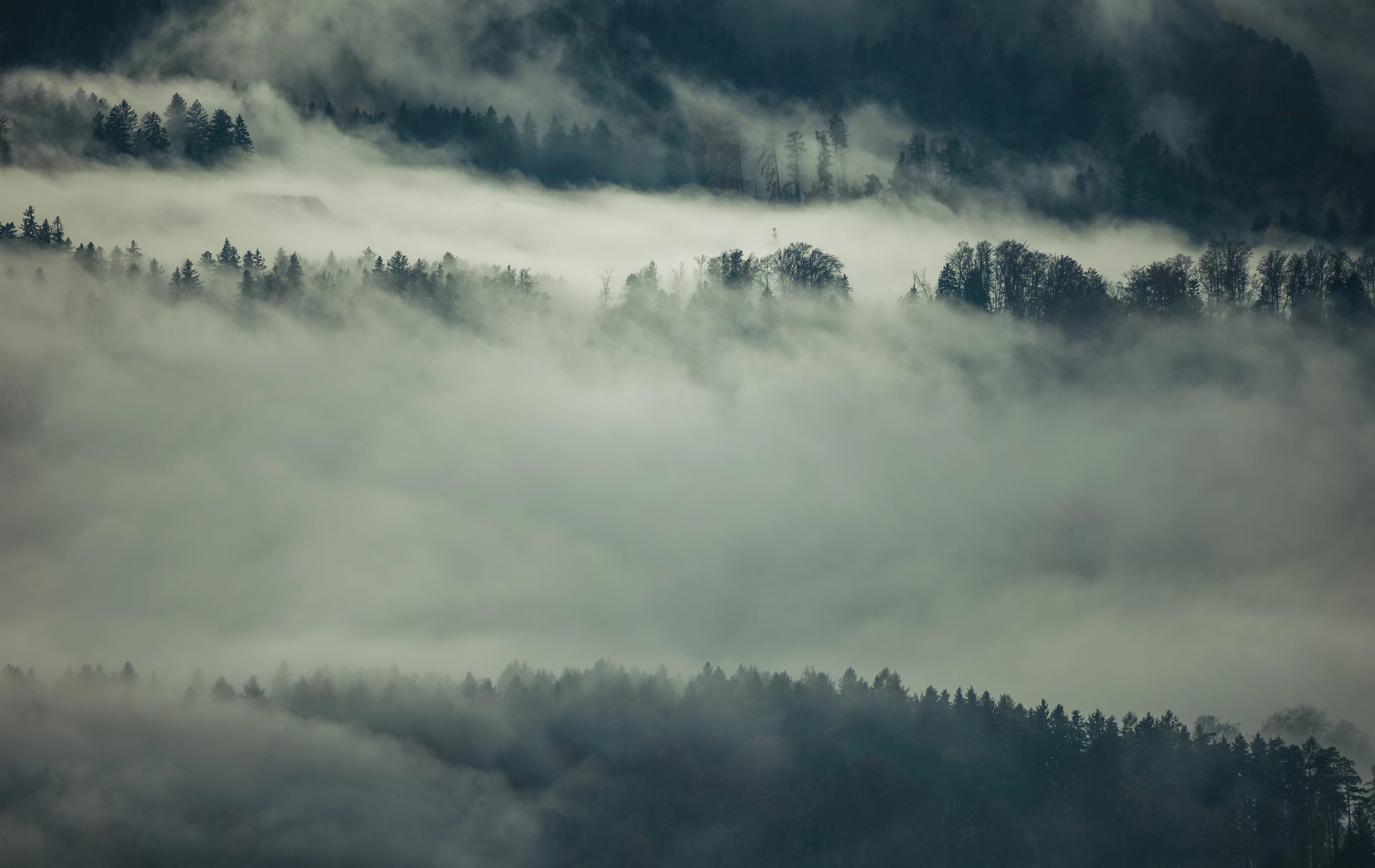
Returning to fog, tule and otherwise, I have not had fog accidents. I am terrified of the 50 car pileups in the fog that always seem to happen in other states, far from home. When driving, I see a wisp of low clouds, fog drifting into valleys between hills, and I visualize sudden tule fog, and a million car pileup. There is no filter between this first glimpse and my dread.
I no longer drive often to the mountains, I no longer ski, and I follow weather reports if I drive within any distance of highway passes that may rise to winter elevations below the snow level.
I used to ski outside the boundaries of the roped off ski area, following stoned boy acquaintances, while not stoned myself. I jumped snow cornices, from a standing position, without pushing off from higher on the slope. I jumped and felt the wrench back of my shoulder on landing, brave smile, no problem. It hurt for a year.
Now there could be avalanches, now there would be fear, and there is hindsight. Another word, cornices, learned in the context of male bravado. Trying to keep up. Daring my fear and my limitations to recede.
Oh, and another time rappelling down a rock cliff, I turned upside down immediately past an overhang, feet tangled in the ropes. I had lowered my upper body too quickly before feet were planted securely to make a 90 degree angle with the cliff. I was on belay, held by ropes and a human anchor, 150 feet up. “You’ll have to figure it out, I can’t come down and help you.” She trusted I could do it, and I did it, terrified, detangling and then descending, with skin ripping under the rope on my back.
More words, rappelling and on belay. I was safe because I was on belay from older women. Maybe these women were 22 or 23 or 24 years old. I was safe because I decided to be.
I have need for the concept of rappelling, descending quickly in a controlled way. Don’t jump way out for fun, bounding down the cliff like in the movies, because it’s not safe. I also have need for the on belay, meaning you are on a rope, we got you, you are protected.
I do not feel on belay. And I wonder if I need this unusual expression.
The words come from the nautical world, adapted to climbing. In reference to climbing it means that one person is protecting another. It serves as description and signal, call and response, or question and answer. It builds an agreement to share the responsibility of the risk.
I wonder if it could help with boats turning turtle in the wind. The nautical belay meant to anchor. It’s an old word.
I do like the concept of shared responsibility in our risk.
I’d like to return to the whiteout, or driving blind, which is what the experience feels like. My experience of a whiteout was in a station wagon driven by my father down a mountain after a day of skiing. Earlier in the lodge on this very cold day, I had observed a group of people consuming too much alcohol. It was the over loud type of drinking and I thought about them skiing like that or driving like that or being like that. I didn’t like it, maybe because of the noise, or the lack of decorum, or any of my other young woman judgments that flew by in the moment. I was aware of the risks. I went out to ski again, leaving the drunk people to their loudness.
Our family later left for the day and started the winding drive down the mountain in deteriorating conditions. I felt nervous in the whiteout, without any visibility, all the while my brother and his friends chattered in the far back seats facing the back of the car.
There was the jolt and sound of impact from behind. It was loud. It was cold. It shattered glass and metal. I probably (certainly) swore on impact. My brother and his friends in the far back were uninjured.
I remember trying to tell my parents that the people who hit us had been drinking in the lodge.
I was yelled at for swearing. I was told to be quiet, yelled at to silence what was true. I couldn’t understand why I was being told to be quiet. These were the same people I had watched in the lodge, studying their behavior and their faces maybe in preparation for this moment. Perhaps in this world of weather hazards, being drunk was considered something that was unworthy of mention.
The natural world moved through in unnatural rhythm with unnatural intention can be dangerous. Or if not dangerous, scary to me with words as signals to what can happen.
So we have whiteouts, tule fog, turning turtle, rappelling and on belay.
I could make unsubtle links to what we are experiencing in our world today, a fully unnatural world which has fully unnatural, I will call it evil, intention.
It feels overwhelming on most days.
We are driving blind, but we have a vehicle. The whiteout is unnatural, the gaslighting of fading white supremacy, please fading. We wake up aware we have vertigo, but take time to make a plan. Get up, make tea, walk, hold each other in the darkness. We are driving blind, waiting for the blizzard to subside, waiting for our beating hearts to subdue. Maybe we’re in a whiteout is a good word. White Out. Love In.
The fog of generational trauma, coming up in the morning also, voices that would tank us, voices requiring loyalty, our voice of rage. Can we find rage and connection at the same time? Can we walk the danger of this edge with joy? Stepping slowly through tule fog, if we stay out of the cars, and walk the fringes, protecting what we see, can we do good in this darkness?
Turning turtle in the boat is a formulaic story in my history. Many people have learned the meaning of the turning turtle expression from me. My son cringes when I tell this, among other formulaic stories, when a certain memory button gets pushed, I might, and do, repeat myself. The trigger could be a stormy day, sailboats in the distance, sailboats up close, or being caught.
Being caught. The terror of our day, smash the state.
When I lived near Marseille, I wanted to find the rowing club. I was walking alone near the docks one day and the area was pretty empty of people. A man came up and started speaking to me in French. I told him I liked to row and was looking for the rowing club. He must have been slightly dangerous because I still remember his face. But he seemed goofy and I wasn’t frightened.
I talked about how I liked boats. He said he had a sailboat and asked if I would like to see it. He pointed out a small sailboat on the dock and asked, would you like to see inside? This was a small sailboat. I had seen many small sailboats. I must have had quite a clear mind, even then, as I said, multiple times, I can see it from here.
I took the train back to my friends in a nearby town, and they said, you were walking on the docks alone in Marseille? There’s a slave trade for girls like you in Marseille.
This time not caught in the ropes under the bow. Or maybe he held nefarious but not quite that nefarious plans. Noticing what was true, while not noticing or seeing the whole picture.
Now I note that we see little of what is happening, only the surface of the disaster. Some wise people with less access to the privilege of missing acute danger have seen this all along.
And yet even with our limited vision and vertigo, in whiteouts, tule fog, and tangled in ropes, perhaps we can somehow create on belay, both tethered, anchored, grounded and held by another, a shared responsibility to protect.
I like the idea, wraps it up. A shared opportunity to acknowledge connection, find courage and find our way down the cliff. While I can in any moment doubt it holds, sharing the risk and taking the steps is our path forward.
